Watching the Sun

Watching the Sun much in the way that many people have in the past…..

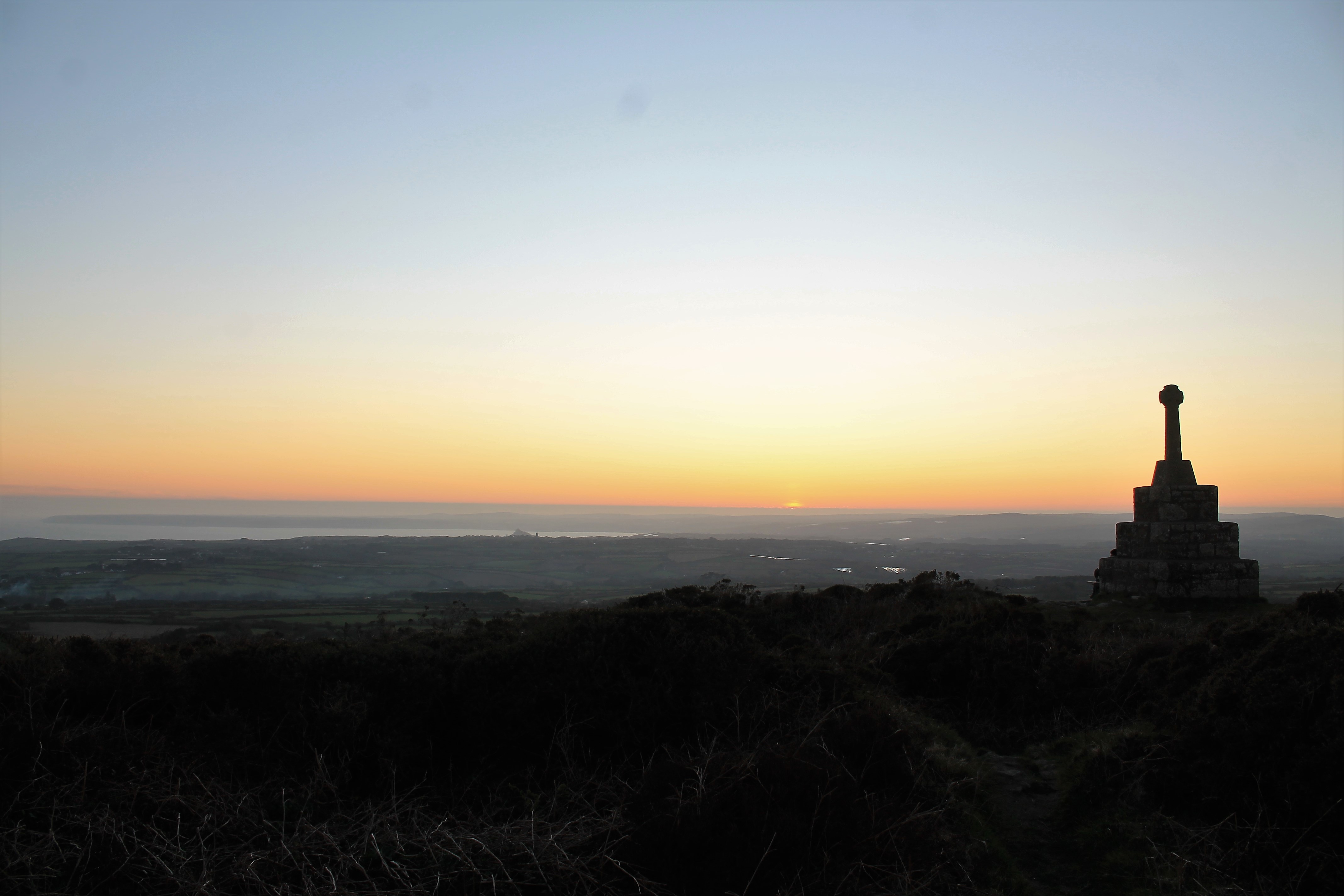
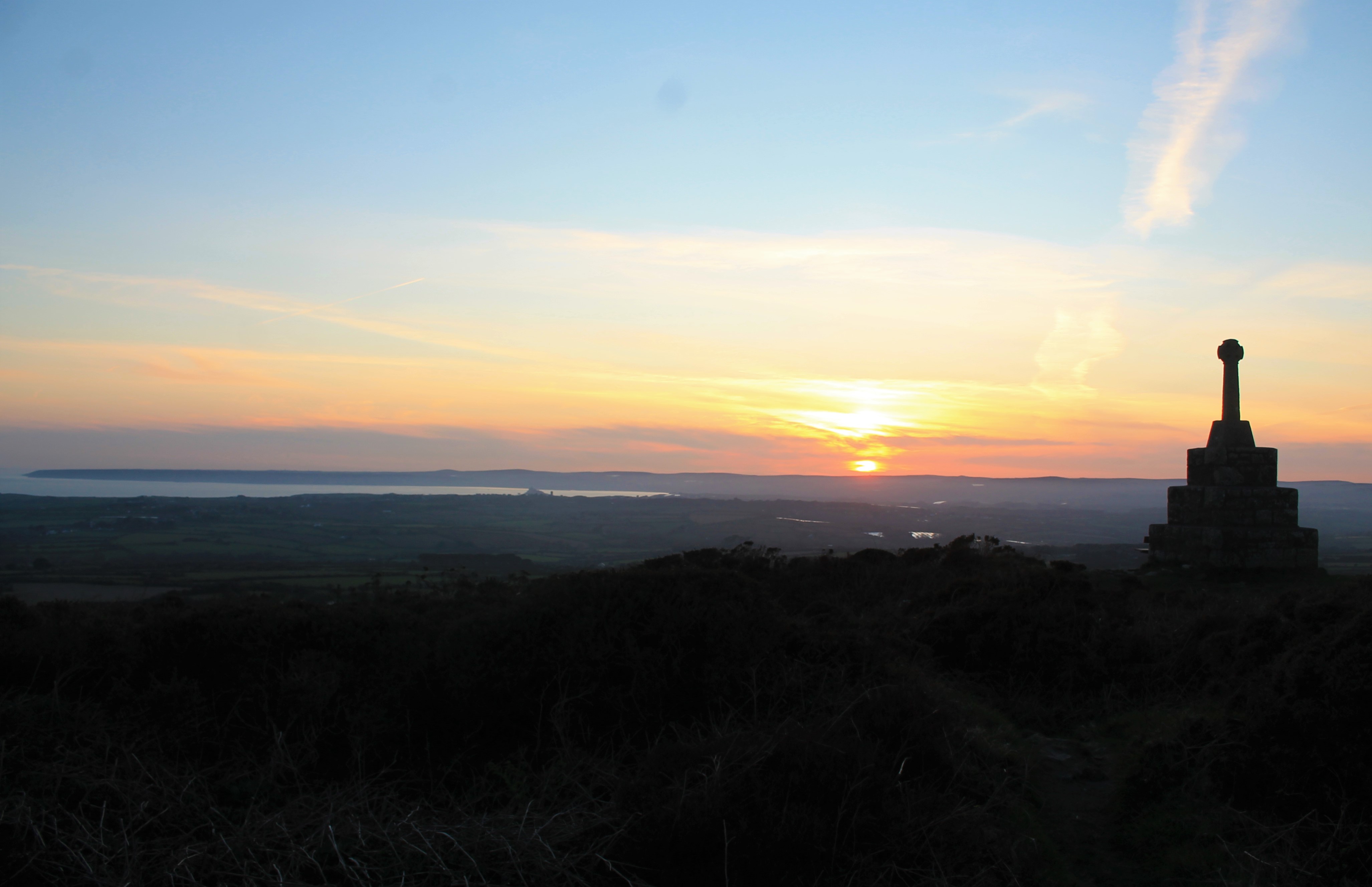
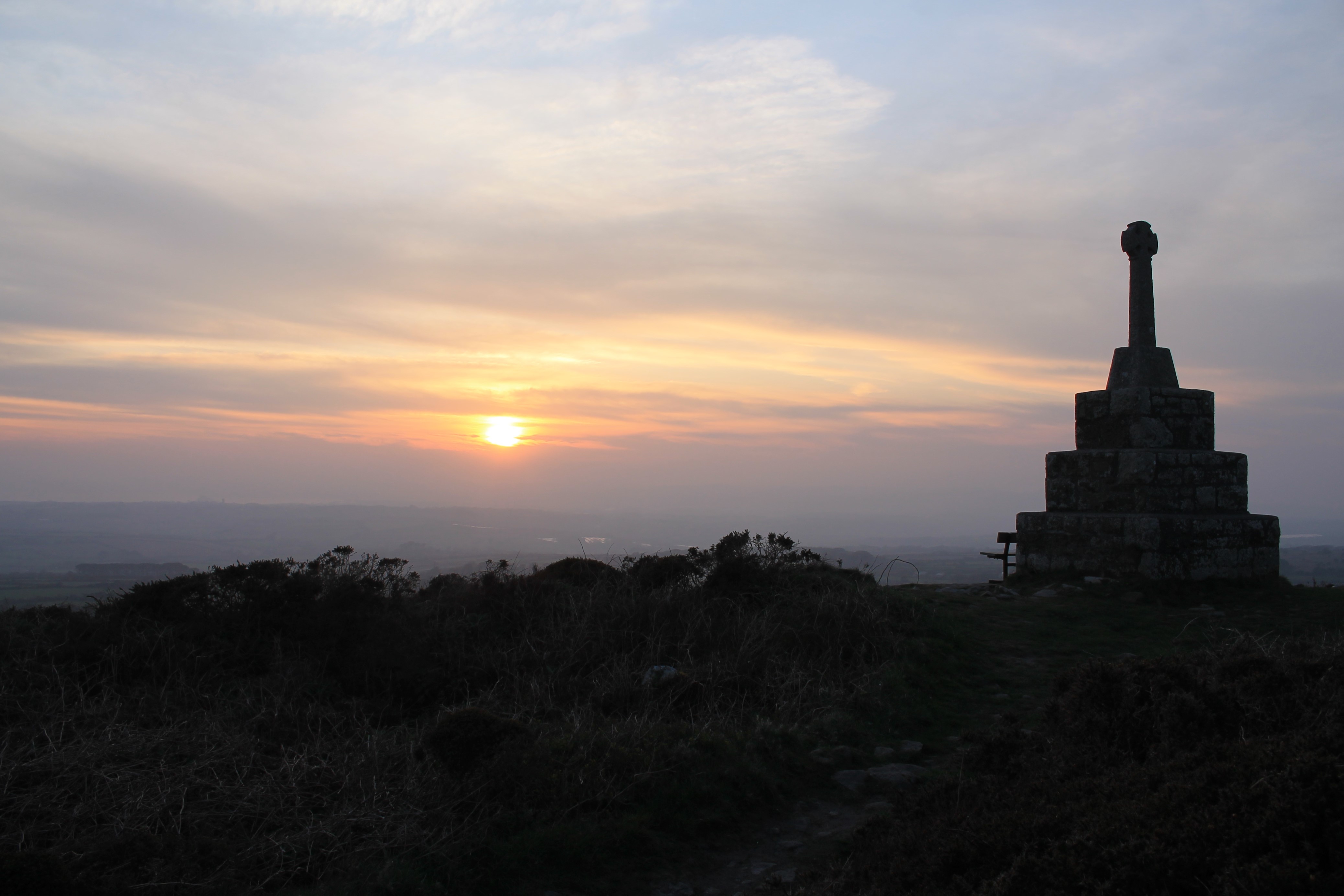
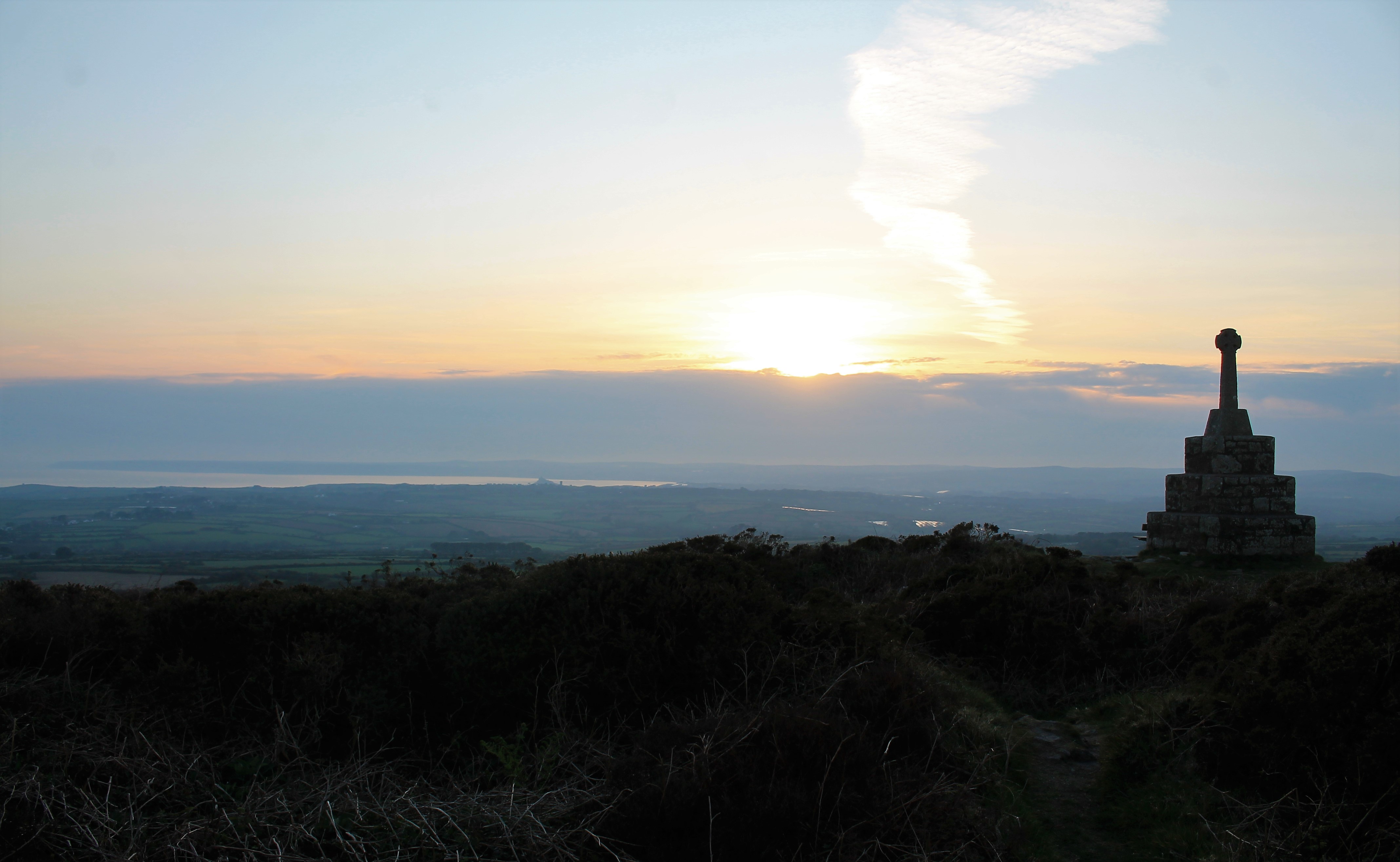
At equinox the daily displacement of the Sun is at its greatest. moving past this towards the solstice sees a slow decrease in its rising and setting positions along the horizon. One question is how noticeable a change does this make from day to day, particularly with a long and distant sightline?

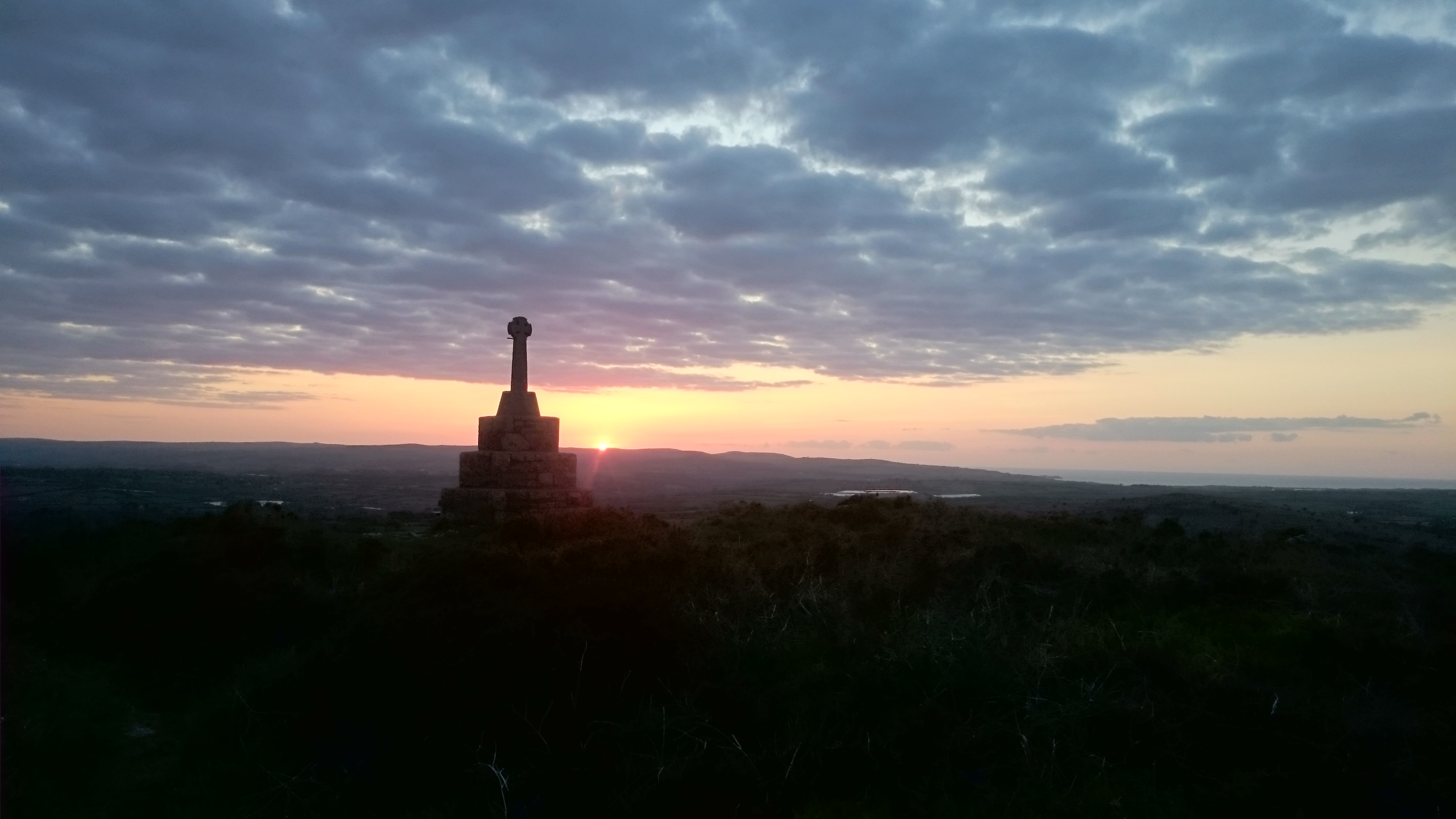
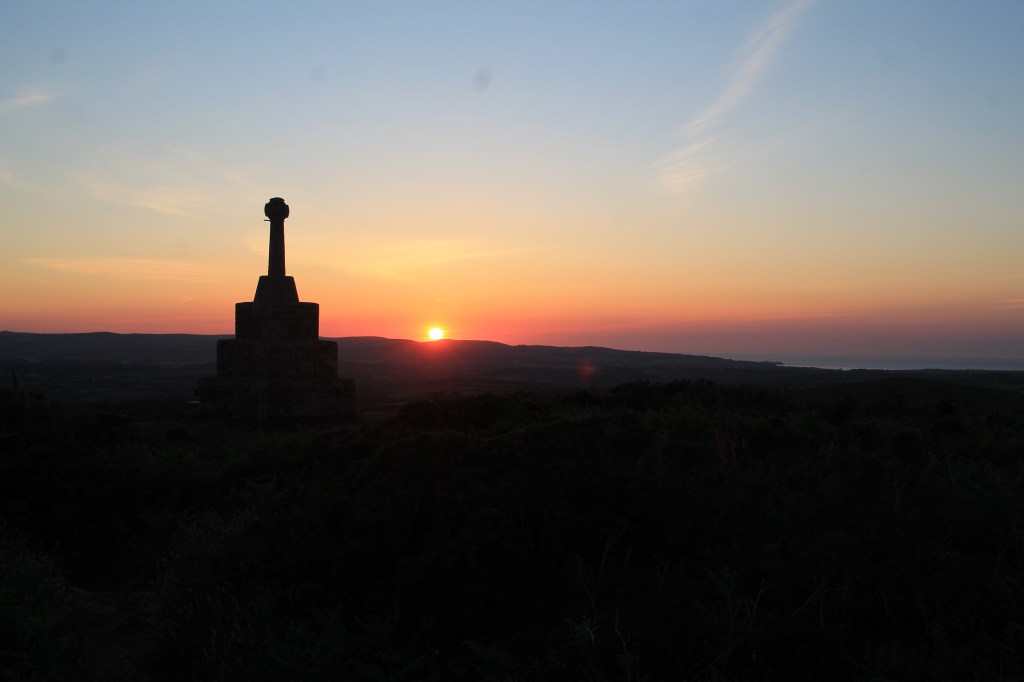
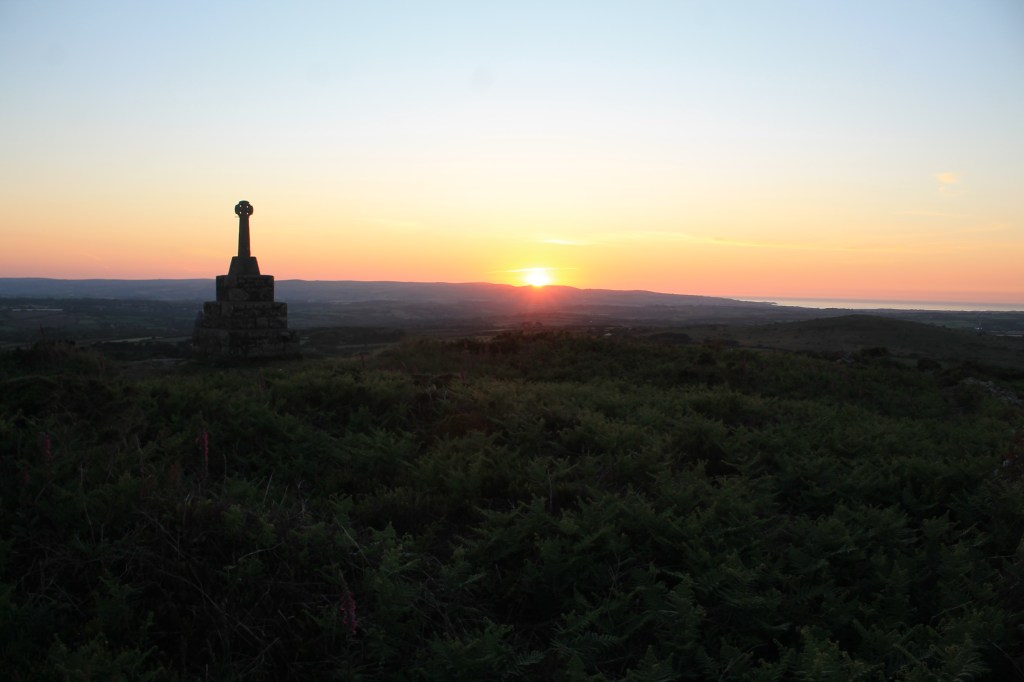
The following images have been taken from the summit of the Iron Age hill fort Castle Pencaire looking towards west Cornwall and Penwith.

There will be an image for many of the sunsets during isolation, I will try and update regularly,  with the intention of demonstrating how visible the daily displacement is to someone making observations and watching the Sun. This is inspired by mayescreative.com  #seventeensuns #watchingthesun HLF project which is revisiting the seventeen years that Schwebe made solar observations, which lead to his discovery of the solar cycle.

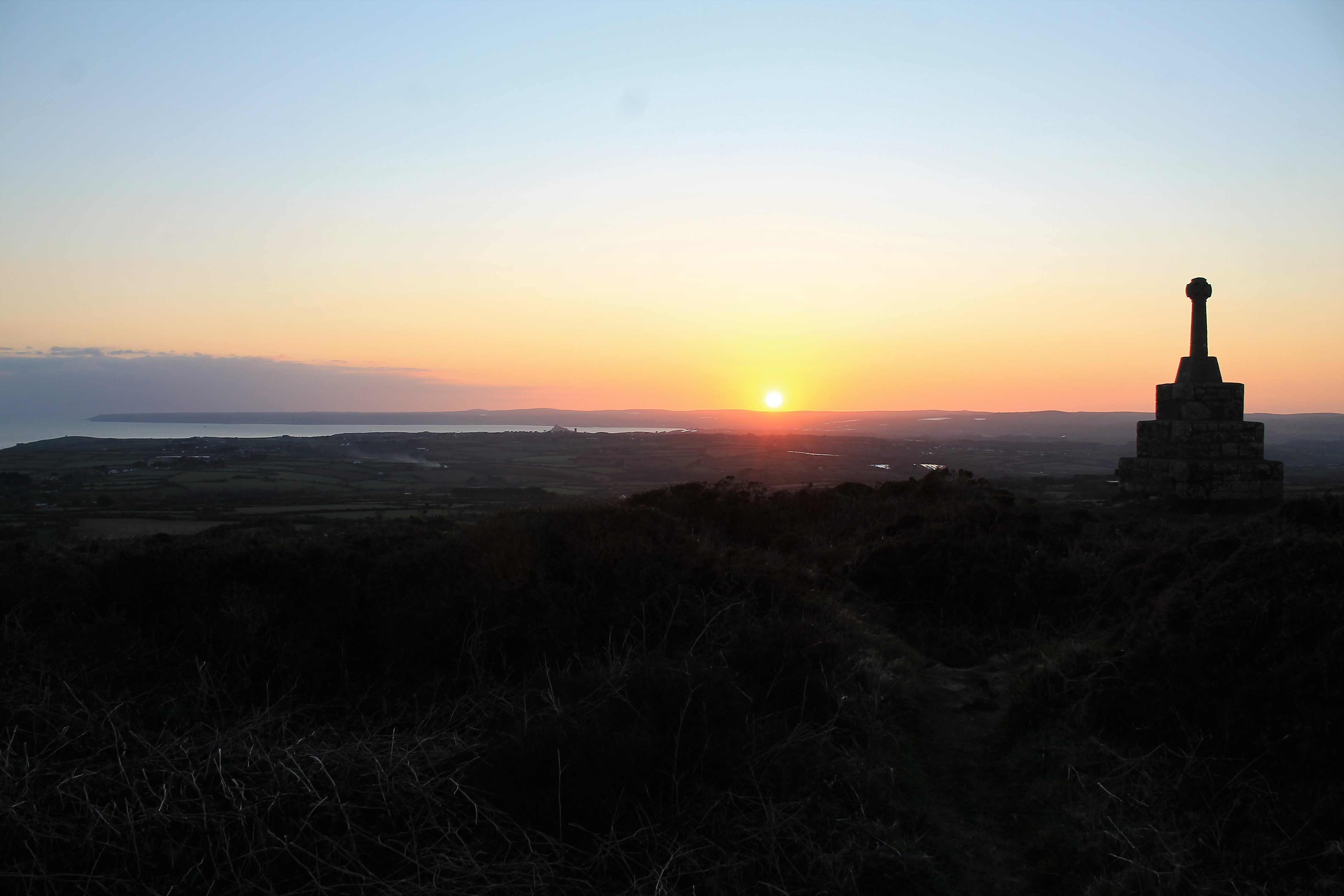
290320
March 29th sunset at 19.50 BST, 277 degrees. One week past spring equinox the Sun now displaces to the north
310320
March 31st sunset at 19.53 BST, 278 degrees. Sun has moved one degree to the north
010420
April 1st sunset at 19.54 BST, 279 degrees. Sun has moved one degree to the north
020420
April 2nd sunset at 19.56 BST, 279 degrees. Sun has moved less than one degree to the north
030420
April 3rd sunset at 19.57 BST, 280 degrees. Sun has moved one-degree to the north
040420
April 4th sunset at 19.59 BST, 281 degrees. Sun has moved one-degree to the north
IMG_0104 (2)
April 6th sunset at 20.02 BST, 282 degrees. Sun has moved one-degree to the north
070420
April 7th sunset at 20.0 BST, 282 degrees. Sun has moved less than one-degree to the north
080420
April 8th sunset at 20.05 BST, 283 degrees. Sun has moved one-degree to the north
090420
April 9th sunset at 20.07 BST, 284 degrees. Sun has moved one-degree to the north
100420
April 10th sunset at 20.08 BST, 284 degrees. Sun has moved less than one-degree to the north
IMG_0238 (2)
April 11th sunset at 20.10 BST, 285 degrees. Sun has moved one-degree to the north
IMG_0267 (2)
April 13th sunset at 20.13 BST, 286 degrees. Sun has moved more than one-degree to the north
140420
April 14th sunset at 20.15 BST, 286 degrees. Sun has moved less than one-degree to the north
150420
April 15th sunset at 20.17 BST, 287 degrees. Sun has moved one-degree to the north
160420
April 16th sunset at 20.18 BST, 288 degrees. Sun has moved one-degree to the north
210420
April 21st sunset at 20.26 BST, 290 degrees. Sun has moved two-degrees to the north in four days.
IMG_0386
April 22nd sunset at 20.27 BST, 291 degrees. Sun has moved one-degree to the north.
230420
April 23rd sunset at 20.27 BST, 290 degrees. Sun has moved less than one-degree to the north.
sunset moved
April 28th sunset at 20.37 BST, 295 degrees. Sun has moved 5 degrees to the north in 5 days.
080520
May 8th sunset at 20.52 BST, 299 degrees. Sun has moved 4 degrees to the north in 10 days.
110520
May 11th sunset at 20.56 BST, 300 degrees. Sun has moved 1 degree to the north in 3 days.
DSC_3410
May 12th sunset at 20.58 BST, 301 degrees. Sun has moved 1 degree to the north.
May 30th sunset at 21.21 BST, 307 degrees. Sun has moved 6 degree to the north in 18 days
May 31st sunset at 21.22 BST, 307 degrees. Sun has moved 0 degree to the north
June 1st sunset at 21.23 BST, 307 degrees. Sun has moved 0 degree to the north

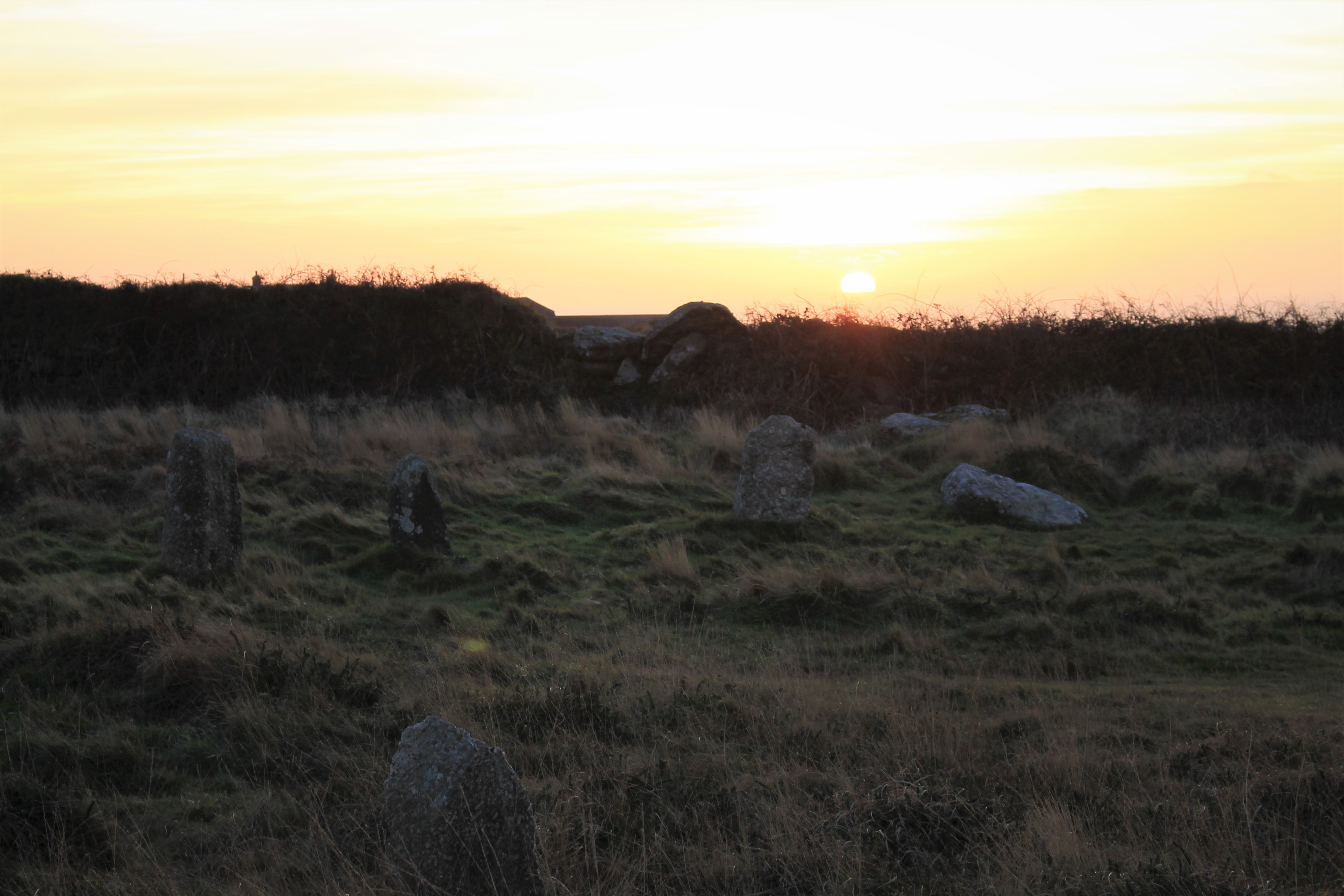
Little Galver (Galva) and the Midpoint Sun

I first encountered Little Galver’s viewing station during an exceptional Pathways to the Past (CASPN) walk led by David Giddings. Nestled within the West Penwith moors, this hidden gem captivated me with its triangular arrangement of stones that perfectly frames the imposing Carn Galver.

During that initial visit, I took a compass reading of approximately 270 degrees. This sparked my curiosity about how the framed Carn Galver would align with the setting sun during the equinox. On the evening of the equinox, I finally had the opportunity to witness this phenomenon. As the sun descended, it didn’t merely set; it gracefully rolled down the spine of the hillside. This mesmerising display unfolded over nearly fourteen minutes, with the sun dipping in and out of the terrain’s natural undulations.

It was a breathtaking solar spectacle, evoking a sense of wonder and connection to the ancient past. One can’t help but ponder: who last observed this alignment? Perhaps it hasn’t been seen since prehistoric times.

Dark skies and astro tourism

A lovely writeup from Sophie Lam in the Inews about finding dark sky spaces. Obviously, I’m biased but Cornwall has some wonderful stargazing spaces. Including Bodmin Moor which is a IDA Dark Sky Park and West Cornwall which is currently applying to be a Dark Sky Reserve.

Here is a link to the article which includes a quote from me about the wonders of the Cornish night sky.

How to book a stargazing trip in the UK and further afield _ inews


Measuring the Universe with The Tate St Ives at Porthmeor Beach.

mu

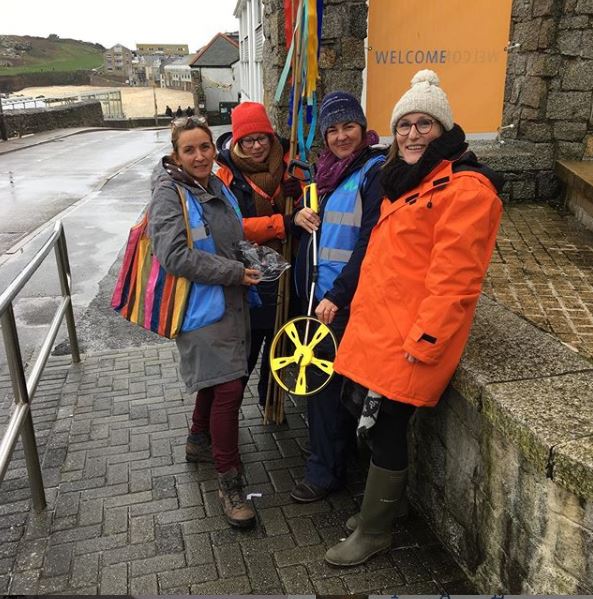
We have been having lots of fun down at the beach in St Ives. As part of Mayes Creative Measuring the Universe Heritage Lottery funded project we have been celebrating the 250 year anniversary of the Transit of Venus. During the Tate St Ives Winter Festival we braved the elements to head on to the beach to walk the relative distances between the planets. At each location, we played sounds of the planets and placed a flag to represent a planet. As part of the day, we were interviewed on the project by Jack Murley on Radio Cornwall.

Here is a link to the radio interview with BBC Radio Cornwalls Jack Murley

Thanks to Justin for the sounds and this video pf one of the flags blowing down the beach.

https://twitter.com/i/status/1200067554770915333

Here is a link to the work that artists Joanna Mayes and Justin Wiggan have been making during the project http://www.mayescreative.com/mtu.html

The Hurlers Inter-circle link under the Moonlight

The Hurlers is a wonderful triple stone circle site located within a larger ritual landscape on Bodmin Moor. There has been a number of excavations undertaken at the site including the exposing of the inter circle pathway, which is a unique and interesting feature.

During 2013 Mapping the Sun project, when the pathway was exposed and excavated, there was an observation that it could have been made to look like Milky Way on the ground. Although the pathway is now been turfed over we had the idea of recreating this effect. The moor itself has a yellow clay and anyone walking around in the troughs and valleys may find their boots stained in the wonderful yellow colour, although there was no remaining evidence of this we thought what would happen if the stones in this pathway had been packed with the yellow clay around them. How would that look under a full Moon? How would it look in the dying sunlight of an evening?


An experiment was born.

We headed out onto the moor with a long sheet of yellow cloth and laid it upon the location of the inter-circle link, we waited and watched the sunset and then we also watched what happened in the moonrise, I am sure you will love the results we found in the video below.


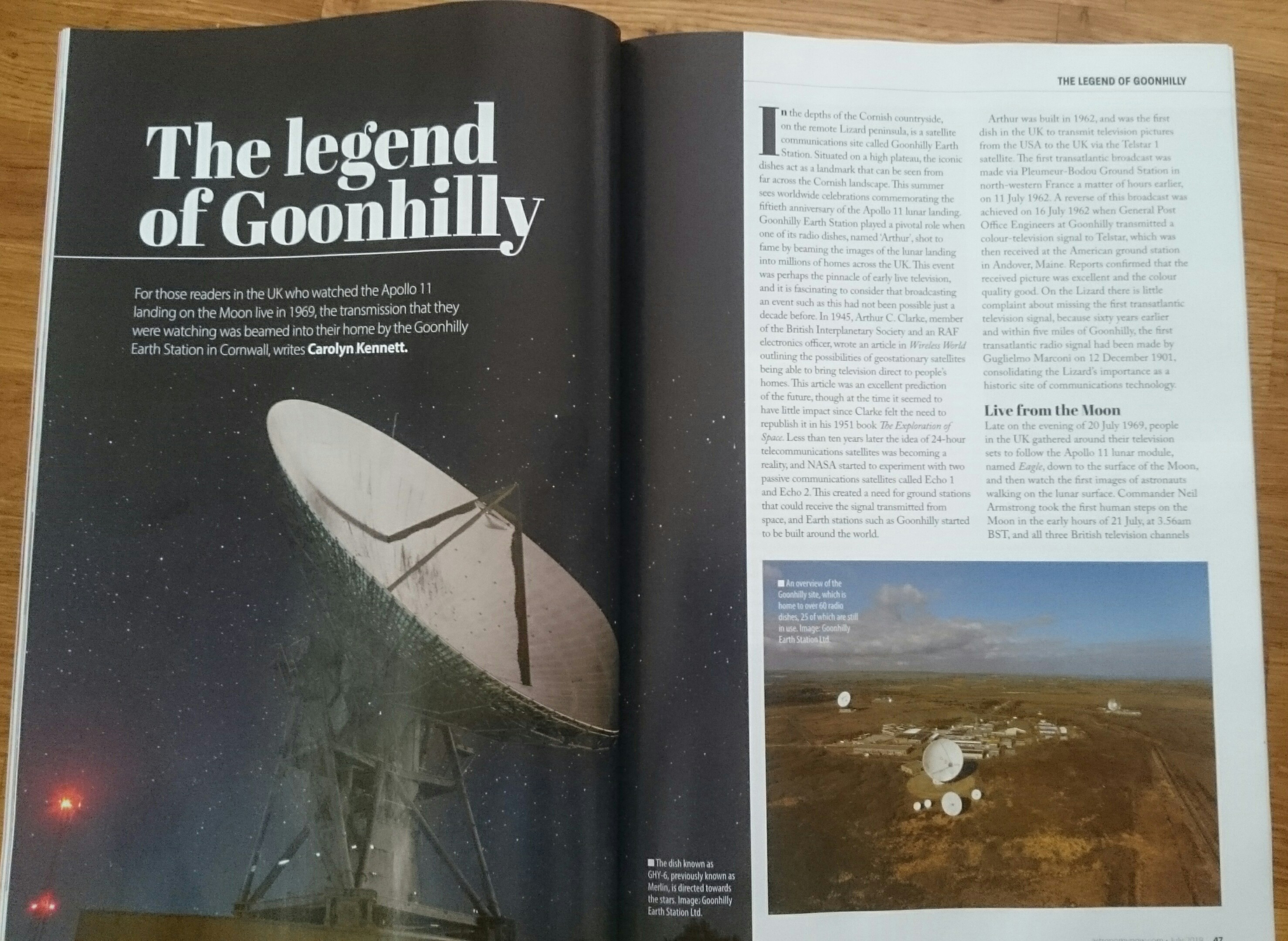
Apollo 50 and Cornwall

We had a wonderful day at Goonhilly Earth Station celebrating the lunar landings on Saturday. The celebrations kicked off early and went on all day and night, reaching the 3.56BST time which Neil Armstrong placed the first human footprint onto the moon.

I was there with Mayes Creative and their wonderful meteor sculpture and its cosmic ray detector. More can be seen about what we got up to where we were interviewed by Cornwall live.

I also made it onto ITV West country news on their Saturday night broadcast talking about cosmic rays – this can be viewed here

I also wrote a lovely article for Astronomy Now (July issue), all about the role Goonhilly played in the broadcasting of the Apollo 11 lunar landing images.  If you haven’t seen this months issue it’s well worth checking out as its full of wonderful lunar memories and features.

_20190722_140937

A big thank you to all the people who made this event possible – it was wonderful to play a small part on the day in which Goonhilly showcased the best of Space Cornwall on this amazing anniversary.

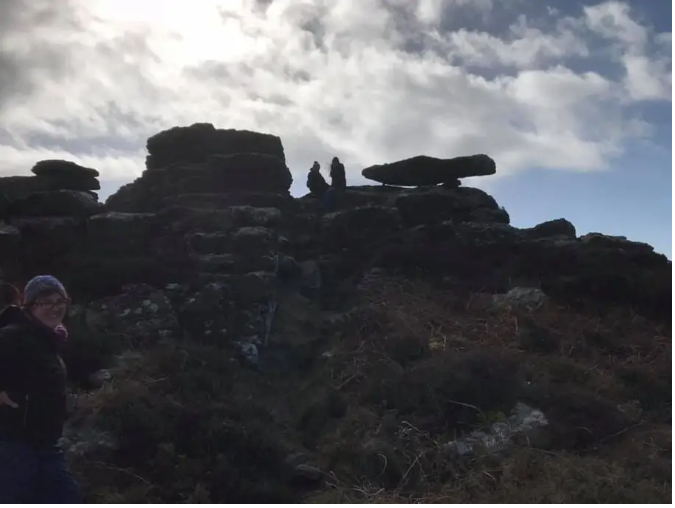
Propped stone / pseudo quoit at Carn Kenidjack

Possible propped stone on Carn Kenidjack.

Walking towards Carn Kenidjack you cannot be astounded by the magnificent rock formation that forms the main outcrop on the hilltop. This natural formation is clearly visible for miles around and must have acted as a visual marker in the West Cornwall upland area.

Interestingly I have often wondered about one part of this formation which does not look like it is part of the natural feature but seems to be a later human addition. Approaching from the NE side or nearest North Road to the right hand side of the outcrop is a large rock propped onto 2 stones. One of these stones is much smaller than the other, but between the two they raise the large piece of granite away from the main structure. The large rock balanced on these stones has a capstone shape especially when viewed from further afield. About half a mile distant on a visible ridge is Chun Quoit and it amazes me the similarity in shape of the two objects when viewing the objects from each other. I wonder if the stone high on Carn Kenidjack is a propped stone or pseudo quoit much in the manner of the propped quoit of Leskernick.

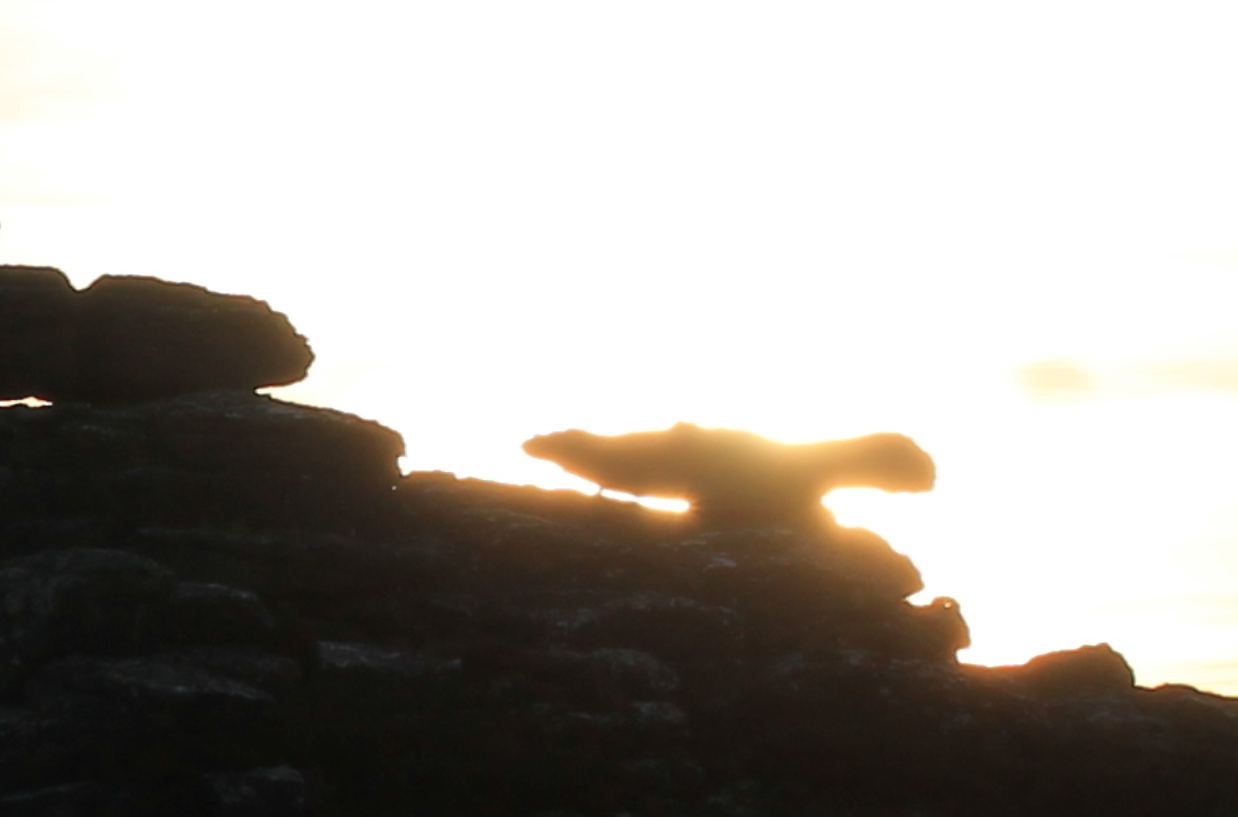
A further consideration is that when you stand at Chun Quoit on the winter solstice you will see the Sun sets behind Carn Kenidjack and during prehistory it would have highlighted the pseudo quoit even more. If people did move a rock to the top of this formation it would have been a massive undertaking and shows the reverence they held for the Chun quoit on the local hillside and its connection at the winter solstice and the outcrop of Carn Kenidjack

Image taken at winter solstice sunset

Chun Castle

Chun Castle

Image taken by Carolyn Kennett (2019) please seek permission before reuse

Here is the wonderful Iron Age Chun Castle, taken by my drone on a really clear day in January.  What is amazing is how clear of bracken and gorse the site is, courtesy of the volunteers of the Penwith Landscape Partnership who were out clearing this in all weathers during December. The walls of this site used to be 5 meters in height until the stone was robbed to build Madron Workhouse. It was lived in by both people of the Iron Age and during the Medival period. The huts from the Iron age are rounded, while the huts from the medieval are squared edged. Well worth a visit before the undergrowth reclaims it again for another 40 years

The Winter Solstice – Astronomy Now December Issue 2018

This month I have written a piece for the Astronomy Now magazine about some of the best places to go and see the winter solstice.  I included a range of ancient sites throughout the UK and Ireland, which could offer a different type of experience depending on what you were looking for; from the mass gatherings at Stonehenge to the more personal at Calliagh Berra’s House in Northern Island. I could have written about many more wonderful sites and choosing the six sites for the article was perhaps one of the hardest things I had to do. So its worth exploring what winter solstice connections there are in your area before getting ready to head out on the day 🙂

Tregeseal Winter Solstice 2017

From this stone circle, the winter solstice falls into the only visible location on the horizon where you can see the sea. Framed within the sea gap is the Isles of Scilly.

IMG_6807 (2)

Image by Carolyn Kennett 2017