Camera outing

Last night I managed to get out with my camera.  I live in a fairly rural location, even so with the clouds rolling in and the lights from a nearby town, conditions weren’t ideal. Then the full moon began to rise – beautiful but adding to the overall light pollution.  So I called it quits.  Here are the results

Smeaton the first amateur astronomer?

To be sold

Two excellent telescopes, belonging to the observatories of the late Mr Smeaton at Austhorpe, near Leeds, one of them an equatorial and the other a Transit Instrument.
A purchaser may have the opportunity of seeing the manner in which the telescopes are fixed and the constructions to the observatories to which they belong and be furnished with any part of the materials if required, towards refixing them in the same manner. Also two remarkably good time pieces, belonging to the said observatories.
Also a small fire engine with a ten inch cylinder calculated for supplying any gentleman’s house with water.

The telescopes and time pieces will be removed to London, if not disposed of by the first of April.

This advert was placed in the Leeds Intelligencer Monday 25th Feb 1793.

It was while searching through old papers looking for references to telescopes I came across this advert placed in 1793.  Looking into this further I found a story of a man whom was one of the first amateur astronomers.  This advert was selling on his death a large observatory and its equipment which had been placed in his garden at Austhorpe near Leeds in Yorkshire.

The man’s name was John Smeaton.  And if that is a recognisable name that is because this man was a celebrated 18th century civil engineer.  He is known as the father of civil engineering and even possibly even coined the name engineer.  A Yorkshire man whom lived from 1724 – 1792.   A man whom moved in intellectual and scientific circles he was a member of the Lunar society.

During his day job he built the iconic Eddystone lighthouse,  (now seen on the Plymouth Hoe) numerous canals and the harbour walls at ports such as Charlestown and St Ives. But he also had a lifelong passion for astronomy.  A passion which would see him bring his engineering skills to design observatories such as the one which still exists in York, with a conical designed roof.  He also designed wedges for telescopes.  When wanting to view Mercury with better accuracy he improved micrometers with his engineering skills.  His observations of Mercury proved him to be a competent astronomer and the paper was read and published by the Royal Society.  In modern terms he would be considered an amateur – all be it a dedicated one.

Its amazing how one small advert can lead to the discovery of a man’s otherwise forgotten passion for astronomy.

To be continued….


Best UK Beaches ?

With another rainy dark winters day here in Cornwall – its time to look forward to the summer and visiting the beach.  I have read with amusement that trip advisor has released a list of the best beaches to visit in the country.  As wonderful as it is to see such beautiful beaches promoted, especially the four beaches here in Cornwall.  Of the 779 beaches which surround our Island is does make me wonder about how the 10 beaches come top of lists like this.

Looking through the list it quickly become apparent that all the beaches are in high use during the summer months.  Notably absent are beaches from the more remote coastlines of Scotland, Northern Island, Wales and most of the Channel Islands.  So it seems that the top 10 is comprised due to the shear number of visitors which go and sit on these beaches and then go and vote for them on trip advisor

I certainly know that trip advisor’s idea of a best beach would not be mine.   As lovely as these beaches are there are much better hide away and secret coves to be discovered out there.  Cornwall alone has about 300 beaches so this year when visiting please don’t follow the crowd and try somewhere new.

If you do want to check out the top 10 here’s the link

Best UK beaches by trip advisor.

IMG_1322

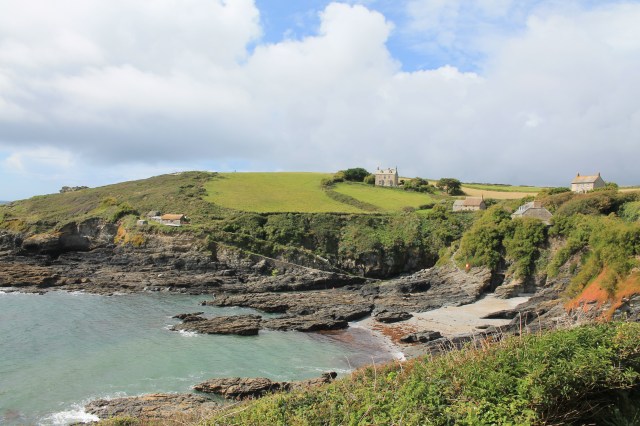
Perranuthnoe beach Sept 2015

Almost a Catalina disastor.


calalina (2)

Here in Cornwall we are often rainy and even more cloudy.  So observational astronomy is a bit of a waiting game.  Last night a gap in the cloud didn’t materialise until in the early hours, so I went to bed and set the alarm for early o’clock.   My plan was to photograph Catalina.  It was certainly cold outside for here.  There was the first frost I had seen in two winters on the ground.  But the sky was crystal clear.  Setting up the scope I realised Catalina was going to be near the zenith, making it harder to look through the scope as I would be bending down.  Scope aligned I sclew to the plough and Catalina’s location and guess what I couldn’t find it.  I looked and looked and catalina was certainly playing a hiding game with me.  Feeling decidedly out of practice and a little foolish I went inside to warm up and look for the gps locations of the comet.  Back out in the cold with information to hand I started aligning the scope again and that is when the owl swooped.  I felt a swoosh near my head and glancing up this huge wingspan of a owl had nearly knocked my hat flying off my head.

I had heard the tawny owls distinctive hoot in the trees behind our house all night but that is nothing unusual.   I had never seen one of the birds up close and personal before.  I know this was stupid but I was now feeling decidedly spooked.  I don’t know if it had been trying to land on me or just dive-bombing me but now I certainly must have looked a sight crouching even lower looking every few seconds over my shoulder.

Tawny-owl-006

Image credit Renaud Visage/Getty Images

Anyhow I managed to get a quick one shot long exposure of Catalina –  not my best shot ever but least I got one.  I then packed away my scope and watched the ISS make its pass just after 6am.  As dawn was upon us there was a lovely line of planets rising from the south east Mercury, Venus, Saturn and Mars.  Jupiter had dropped behind the tree line for me.  But 4 was great to see anyhow.

Tim Peake a very British astronaut

image

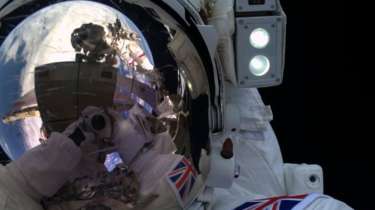
Yesterday the a UK was gripped by space walk fever.  Tim our ever smiling and unflappable very British astronaut was the first person ever to emerge from the hatch of the ISS wearing a Union Jack on their sleeve.  It was so great to see that Britain has finally been represented in space.  Prior to Tim British born people have had to make their journeys as commercial astronauts or under other national flags due to the lack of funding from successive British governments. Tim’s selection and training started as early as 2009.  Although the British government only started their investment in the ISS in 2011. 

Long may space fever continue in the UK and I hope that Tim’s spacewalk isn’t the last time we see that Union Jack on an astronaut floating in space.  Well done Tim watching you work while you walked was amazing.

11 years since Huygens landed.

titan1

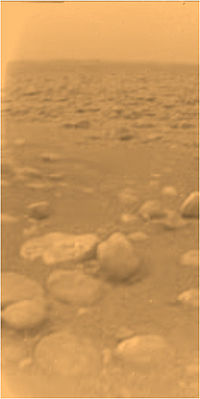
On this day 11 years ago a tiny probe named Huygens landed on Saturn’s moon Titan.  Sending back images of an Earth like but dry landscape.

The science collected by this audacious and tiny probe wasn’t the end of the story for Titan.  The Cassini – Huygens mission has gone through lots of discoveries since. Particularly that Titan isn’t as dry and barren as first envisioned.  Lakes at the North and South pole’s.  The lakes are made of liquid methane and imaged by the RADAR equipment on the Cassini satellite.

Happy landing anniversary Hugyens


A Cornish sunrise – at last!

pluto blue sunrise

Image credit JPL NASA

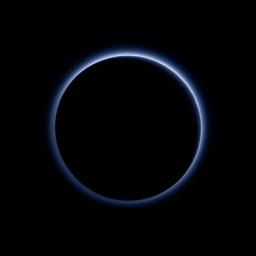
Watching stargazing live  (our annual astronomical tv fest with Brian Cox)  last night I was reminded that different planets would have different coloured sunrises.  Above is a beautiful image of Pluto’s blue sunrise taken by the picture taken by the New Horizons Ralph/Multispectral Visible Imaging Camera.  It is thought that the blue colour comes from nitrogen, methane and particles called tholins.

Winter has been a bit of a damp squid here in Cornwall.  There has not been a sunrise to be seen.  One storm after another this winter has arrived from across the Atlantic and we have already reached the letter R in the naming of them.   I had nearly forgotten what a Earth sunrise looked like.

So this morning when there was a beautiful sunrise with hints of purple I just have to catch this picture of it.  It may not be blue but it certainly was pretty.

IMG_1688

Lightning strikes


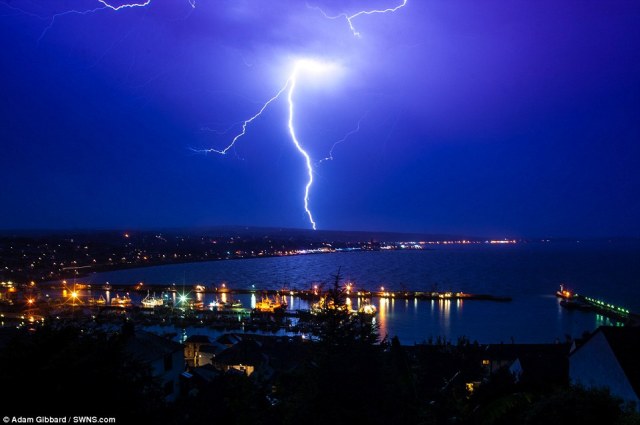
lightning penzance

Lightning over Penzance Credit Adam Gibbard

Lightning stuck Penzance at 4am Sunday morning doing damage to our works phone line. Reported by the local newspaper it was a strike that was large enough to disable car batteries, take down the internet and make plasma tv’s fall from their wall mountings smashing on the floor.  Lightning news.  I love a good thunder storm but this has to be one of the most destructive strikes in Penzance’s history.

A nice piece of technology added to the ISS in 2014 is the lightning imaging sensor.  It records lightning strikes and works on recording lightning both during the night and day.  It would be nice to know if the sensor had recorded the strike and we could find out how powerful it was.  Time for me to go back to trying to get the phone line fixed. Thank goodness for mobiles!


Missing the goal.

Soyuz_TMA-19_spacecraft_departs_the_ISS

Watching Blair Walsh take his field goal and miss during the Vikings and Seahawk’s game Sunday was soul destroying.  Walsh is a kicker whom had scored all of Minnesota 9 points during the game. With 22 seconds on the clock all he had to do was put in one last field goal to see them move ahead of Seattle whom had 10 points.  The goal should have been easy one only 27 yards.  It is something that Walsh would practice over and over again.  Unfortunately he missed and the Vikings were declared out – at least for this year.

This whole event reminded me of the last manned docking of the Soyuz at the ISS.   Britain was watching live as our first affiliated astronaut Tim Peake was onboard.  We were in for a few nail biting minutes as the automatic docking had to be over ridden and manual docking took 2 attempts until the Soyuz latched itself onto the ISS.  These manoeuvres are extremely difficult and hats off to  Yuri Malenchenko the veteran Russian astronaut who undertook making these tricky moves.  This time the Kurs radar system failed and that was why they had to dock manually.

I know the astronauts have trained extensively thankfully manual docking is not a common occurrence.  Things do go wrong though and in 2014 two Russian cosmonauts and one american astronaut were stuck in the cramped Soyuz module as they missed a 24 second boost which would have enabled them to complete a 6 hour journey to the ISS. Luckily for them on-board was food that would keep them alive for a number of days!  In 2012 a unmanned supply module failed to reach dock with the ISS and took another week until it had another chance at docking.

It just goes to show however much training is involved things sometimes do not go to plan.  Hopefully Bradley Walsh will get another chance at redeeming himself in next season.

Rubbish attack

poldu pink]

The stormy weather has hit one of my local beaches here in Cornwall and with it there has been a massive amount of pink bottles washed up on Poldhu cove.  27000 bottles of Vanish detergent were lost from a container ship west of Lands end and have spent months at the bottom of the ocean before the stormy weather has washed them ashore.   A clean-up is occurring with many volunteers arriving each day to help remove the plastic, although some have leaked detergent fortunately many of the bottles are still sealed.

However difficult it is to clear up my local beach it is considerable harder to deal with rubbish in space.   NASA currently tracks 20000 pieces of space junk and the amount is ever increasing.   This recent image highlights how the Earth’s orbit is becoming increasing cluttered.

space-junk_800x600

IMAGE CREDIT Royal Institute of Great Britain.

During 2015 the ISS had to modify its orbit numerous times to avoid collision with space junk.  In fact continuing to litter low earth orbit without formulating a plan of dealing for the existing pieces of junk is short sighted.   It is not like we can just go out and remove them!  The number of countries and independent businesses wishing to use low earth orbit is on the increase and I hope this does not mean a increase in the amount of junk.